Capital: Asunción
Population: 6,413,627 (2025, 113th)
Ethic Group: 75% Mixed, 20% White, 1.7% Indigenous
Area: 406,752 km2 (59th)
Offical Language: Spanish & Guarani
Currency: Guaraní (As of July 1, 2025, 1 Paraguayan Guarani = 0.00013 USD)
GDP per Captial (PPP): $21,273 (2025 estimated, 84th)
Human Development Index: 0.756 (2023, 99th)
Country Profile:
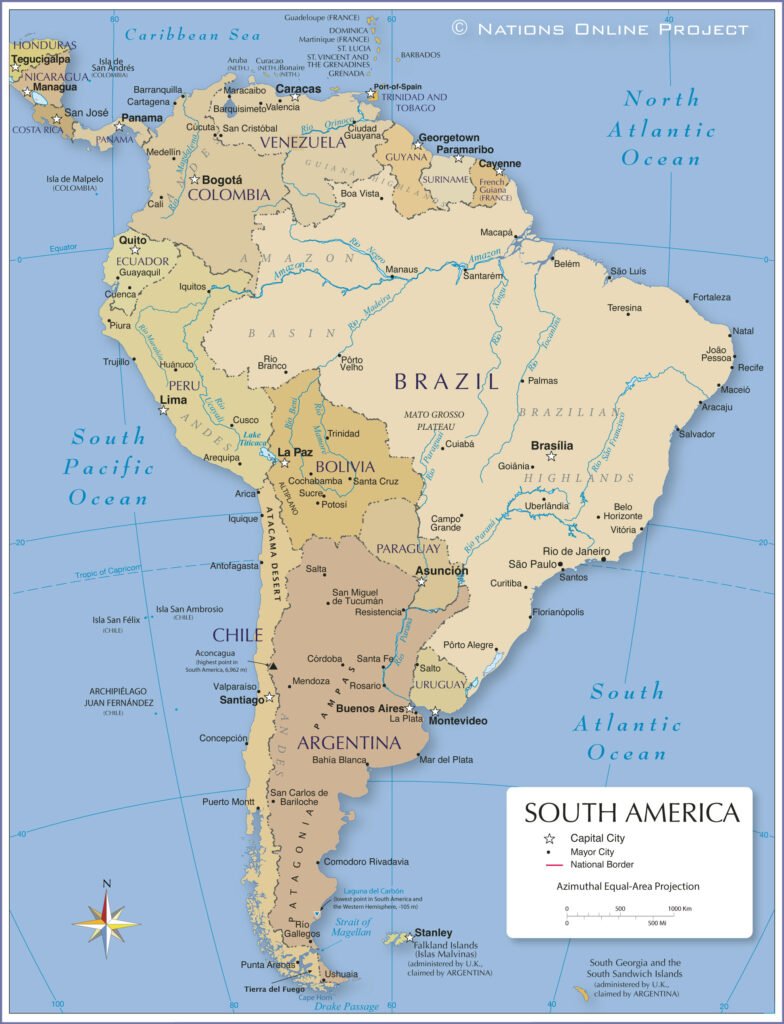
Paraguay is a landlocked country in South America, bordered by Argentina, Brazil, and Bolivia. Geographically, the entire country is divided into eastern and western parts by the Paraguay River.
Economically, Paraguay heavily relies on agriculture and hydroelectric power. The world’s second-largest hydroelectric power station, the Itaipu Dam, is located on the border between Paraguay and Brazil.
Culturally, Paraguay is deeply influenced by Guarani and Spanish cultures. Music, dance, and various crafts are symbols of Paraguayan culture.
Visa and Immigration System:
Permanent Residency By Investment Program:

Citizenship:
Foreigners who have legally resided in Paraguay for two years, and can prove they have a university degree or equivalent technical qualification, or have been paying taxes in Paraguay for two years, are eligible to apply for permanent residency in Paraguay.
Permanent residents of Paraguay who have resided in the country continuously for three years, spending at least 183 days each year, are at least 18 years old, have no criminal record, engage in legitimate professional activities (such as business, work, research, etc.), show basic knowledge of Spanish or Guarani, as well as the country’s history, geography, and politics, are eligible to apply for citizenship.
Tax Implication:
Paraguay is often noted for its simple tax structure and low rates, which aim to attract foreign investment. The defining characteristic is the Territorial Tax Principle.
1. The Territorial Tax Principle:
-
Focus on Source: Paraguay taxes income based on its source.
-
Taxed Income: Only income generated from sources within Paraguay is subject to taxation.
-
Foreign Income: Income generated outside of Paraguay (foreign-source income) is generally not taxed in the country.
2. Key National Taxes:
Paraguay’s main tax revenue comes from corporate income, personal income, and a value-added tax.
A. Corporate and Business Taxes:
-
Corporate Income Tax (IRE): The standard rate is a flat 10% on net taxable income derived from Paraguayan sources. Simplified regimes exist for smaller enterprises.
-
Dividends and Profits Tax (IDU): This is a withholding tax applied when profits or dividends are distributed by a corporation.
The rate is 8% for resident beneficiaries, and 15% for non-resident beneficiaries.
-
Non-Resident Income Tax (INR): Levied at 15% on Paraguayan-source income paid to non-residents (e.g., royalties, interest, technical assistance fees).
B. Personal Income Tax (IRP):
-
This tax is applied to income from personal services and capital gains sourced in Paraguay.
-
The system uses progressive rates that range up to 10% on net taxable income, depending on the income bracket. The primary rates are 8%, 9%, and 10%.
C. Consumption Tax:
Value Added Tax (IVA): This is the main indirect tax, the general rate is 10%. A reduced rate of 5% applies to certain essential items, such as medicines, some foodstuffs, and residential rental.
3. Attractive Investment Regimes:
Paraguay offers a special regime, Maquila Regime, to incentivize investment and exports. This system is highly favorable for export-oriented manufacturing. It imposes a single tax of 1% on the added value of the goods or services produced for export.
4. Notably Absent Taxes:
Paraguay does not impose several taxes that are common in many other countries, making it attractive for high-net-worth individuals:
-
No Wealth Tax.
-
No Inheritance Tax.
-
No Gift Tax.
Passport Power:
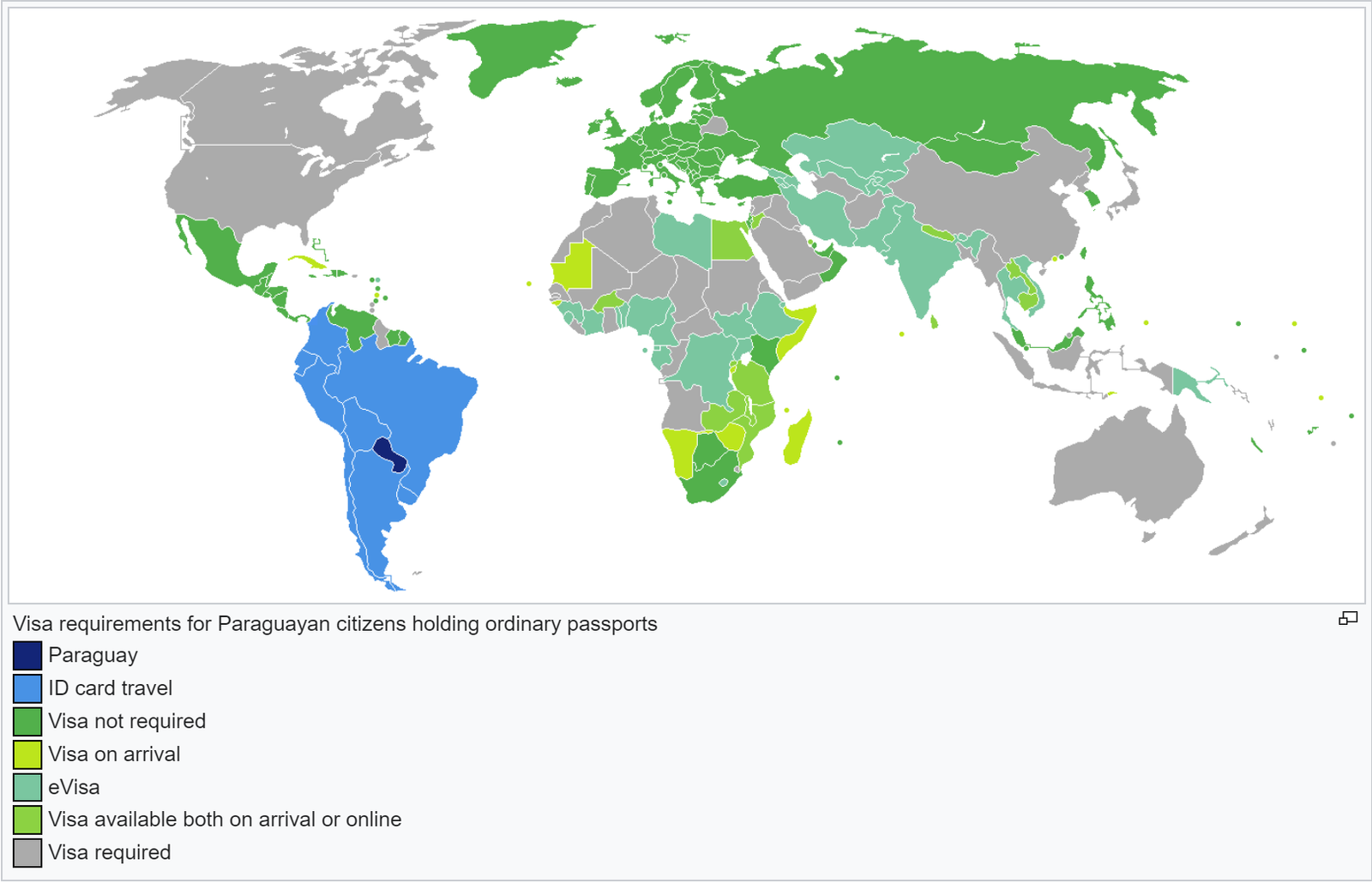
With the exception of individuals of Italian and Spanish descent, Paraguay does not recognize dual citizenship. The Paraguayan passport is ranked 31st globally, allowing holders visa-free or visa-on-arrival access to 148 countries and territories worldwide (July 1, 2025).
Official Links:
Paraguay Migration Office: https://migraciones.gov.py/